

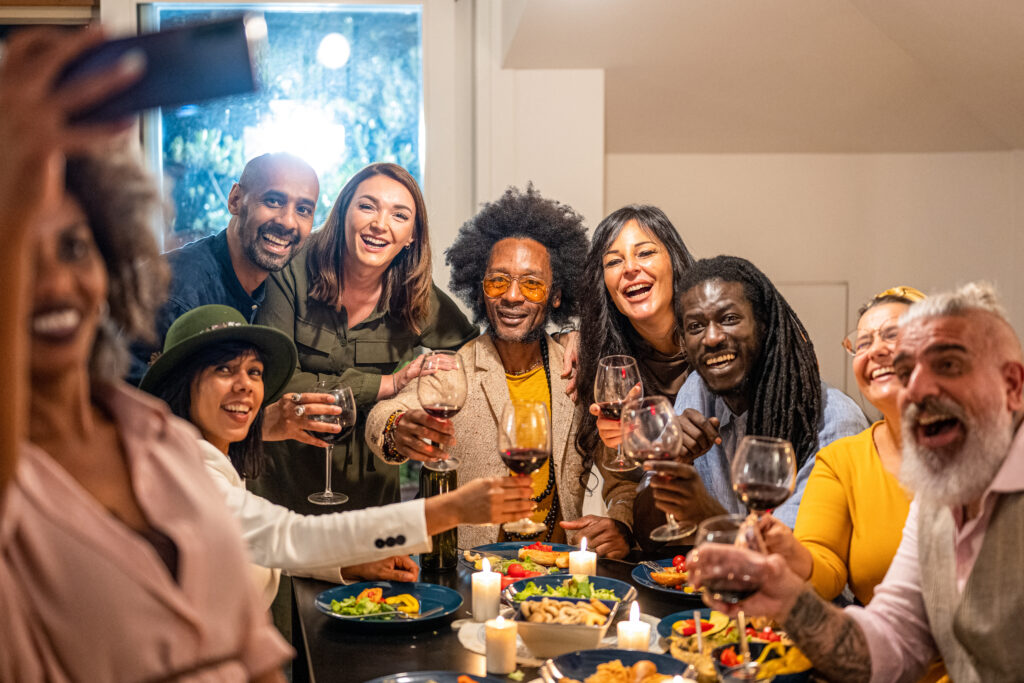
I often wonder what the mood is at holiday tables when someone is missing. They’re not dead, just… decided against. Their parents decided that their child’s queerness was incompatible with their love, their faith, their holiday card aesthetic. Do they feel the hollowness? The othering? And somewhere across town, that same queer person is eating a beautiful meal with the people who chose them. Embraced them and invited them in. I know the mood at that table…I’ve sat at that table. It can be warm, fully pregnant with the love of the season and a salve on the familial wounds of rejection and judgement. Or, for some who are new to it, it can feel like a consolation prize. The family you had to cobble together when your “real” one fails you. Nothing could be further from the truth.
When you’ve done the work of healing, placed shame where it belongs, that table becomes home. The psychology of chosen family is safety, belonging, and stability.
LGBTQIA+ chosen family, as built and practiced for decades, is one of the most psychologically sophisticated survival systems our community has ever produced.
During Women’s History Month, it’s worth remembering that the people who built and fought for that system were overwhelmingly queer women and trans women of color. Their fingerprints are on every chosen family dinner table, every group chat that functions as a lifeline, every auntie who shows up when the biological one won’t.
What Was Taken
Chosen family emerges from a specific familial wound. Nearly half of queer and trans young adults are estranged from at least one family member. Trans and nonbinary individuals endure even higher rates of rejection. Queer youth face 120% higher rates of homelessness, and family rejection is the leading driver. These data points are not abstract. This is the accumulation of a million relational deaths: the parent who “loves you” but can’t support your “lifestyle”, the sibling who stopped calling after you came out, the grandmother who submits your name to her prayer circle.
The psychological impact of this over time is monumental. LGBTQIA+ people don’t just experience discrete moments of rejection. They carry a chronic, compounding stress load generated by stigma, discrimination, and the internalization of both. Family rejection isn’t one event. It’s a persistent source of minority stress that follows a person into their relationships, their self-concept and their capacity to trust that love can be unconditional.
Chosen family grows in this fertile soil. It’s not a trend, or a quirky alt holiday. It’s a survival response to a sustained psychological assault.
Ballroom Culture and the Architecture of Queer Kinship
Long before the broader culture discovered the concept of chosen family and started putting it on throw pillows, Black and Latinx queer and trans communities had already engineered the entire infrastructure. Early twentieth century Ballroom culture created a system of houses led by “mothers” and “fathers” who provided what families of origin refused to: shelter, mentorship, financial support, identity affirmation, and unconditional belonging.
These weren’t metaphors. House mothers were literally mothering queer and trans youth who had been thrown out, cut off, or made invisible by the families that were supposed to protect them. They taught young people how to survive. How to find work. How to hold their heads up in a world hell bent on breaking them. The house system was, and remains, a masterwork of community-level care built by the people with the fewest resources and the greatest need.
This is lineage. When a queer person in Dallas in 2026 calls their best friend “chosen family,” they are drawing on a tradition that Black and Latina trans women built with their hearts and hands, often at extraordinary personal cost. Honoring chosen family means honoring that history with specificity, not bastardizing it into a feel-good concept divorced from its roots.
Queer Kinship is NOT the Consolation Prize…It’s the Gold Medal
Attachment theory, at its core, describes the human need for a secure base: a relationship (or set of relationships) from which a person can explore the world, knowing they have somewhere safe to return. When families of origin provide that, it becomes the psychological foundation for everything else. When they don’t, the absence isn’t just painful. It completely reshapes how you relate to intimacy, conflict, vulnerability, and trust.
LGBTQ+ chosen family, when it functions well, can provide the secure base that biological family failed to offer. There’s a documented statistical significance here. The odds of attempting suicide plummet when chosen family fills the gap that biological family plowed bare.
In practice, it’s the friend who drives you to your first therapy appointment. The drag mother who teaches you how to walk into a room like you own it. The polycule group chat that checks in every morning during a depressive episode. The elders in our community who survived the AIDS crisis and now make sure we know our history. These are not lesser bonds. They are attachment relationships. They regulate the nervous system and mitigate the consequences of minority stress. The research around this increasingly confirms what queer people have always known: chosen family relationships save lives.
Holding the Grief and the Gold at the Same Time
Chosen family exists because something was taken away. Two things can be true; you can be enveloped by a loving chosen family and still grieve the loss of the one who failed you.
I’ve had clients who haven’t spoken to their mother in a decade, but they still cry on Mother’s Day. A queer person with the most loyal, ride-or-die friend group in Oak Lawn can still feel that pain in their chest when a straight friend mentions going to dinner at their parents’ house. This is the full, honest emotional landscape of queer kinship.
I would be remiss in this post if I didn’t mention that truly affirming therapy creates room for both. We don’t necessarily try to resolve tension, because sometimes that tension is not resolvable. But we do work to stop the exhausting internal toggle between gratitude and grief. The maddening back and forth between “I’m over this” and “why does it still hurt.”
In my experience this has looked like finally grieving the father who chose church over his kid, couples working through the impact of having two very different life experiences with family, navigating the dinner dress requirement that doesn’t align with your sex, or processing the fact that mom refused to attend the wedding. This is delicate but crucial work. It requires a therapist who understands the specific shape of LGBTQIA+ family rejection and doesn’t try to fast-track forgiveness or minimize the loss.
The Women Who Made This Possible
Women’s History Month, told honestly, includes the queer and trans women who made chosen family possible.
E. Kitch Childs, PhD, was a Black lesbian clinical psychologist and the first African American woman to earn a doctorate in Human Development from the University of Chicago. Her work directly contributed to the fight to remove homosexuality from the DSM. She helped shift the entire clinical field away from pathologizing queerness, which is foundational to every affirming therapy session happening today.
Del Martin and Phyllis Lyon were partners for over fifty years and pioneers in LGBTQ+ rights advocacy, cofounding the Daughters of Bilitis and spending decades fighting for the recognition that queer love and queer families were real. Jean O’Leary co-founded National Coming Out Day, creating a framework for visibility that made chosen family possible on a broader cultural scale.
Most poignantly, the house mothers of ballroom culture. Crystal LaBeija, Angie Xtravanganza, Pepper LaBeija, Avi Pendavis, and those whose names were never recorded in any official history. These women very literally built the LGBTQ+ chosen family model from the ground up. They did it while navigating poverty, transphobia, racism, and violence. Their legacy is in every queer person who has ever looked at someone with no biological connection and said, with total certainty, “that’s my family.”
This month without these stories is incomplete. It is a version of history with some of the most important chapters torn out.
Your chosen family is not evidence of what you lost. It is evidence of what you are capable of building and what we are capable of building together.
About the Author
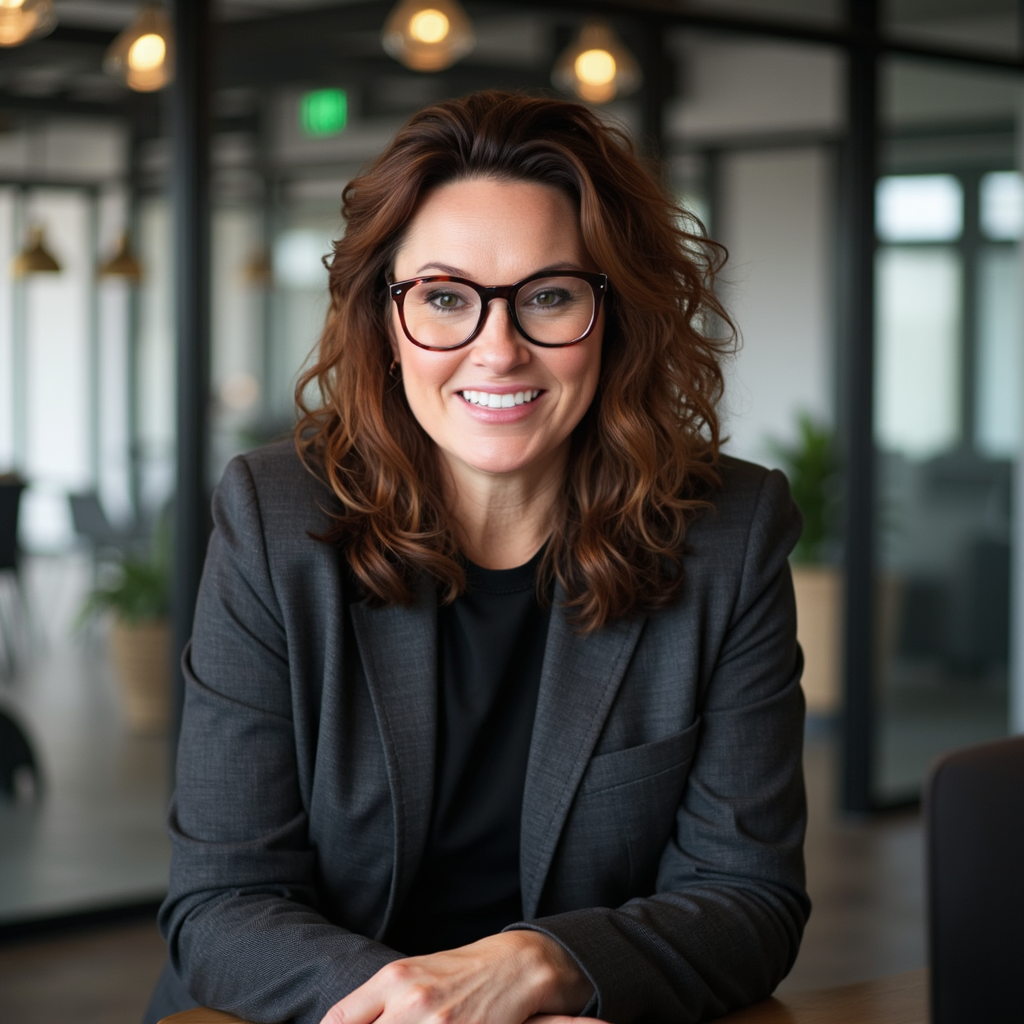
Mayme Connors, LPC-A, LCDC, NCC is a Dallas based therapist who works with LGBTQIA+ adults, couples, and polycules who are exhausted from performing stability, success, palatable queerness. Her clients come in burnt out, trying to figure out who they actually are beneath all the expectations and survival strategies.
Using approaches like Internal Family Systems (IFS), Gottman, Relational Life Therapy, and DBT, Mayme helps clients untangle the deeply held beliefs from family, culture, or society that keep them stuck. She’s collaborative, sometimes irreverent, always honest, and deeply present.
Therapy with Mayme isn’t sterile. It’s messy and magical and hard, one badass step at a time.
Ready to start therapy? Book a consultation or learn more about working with Mayme.
